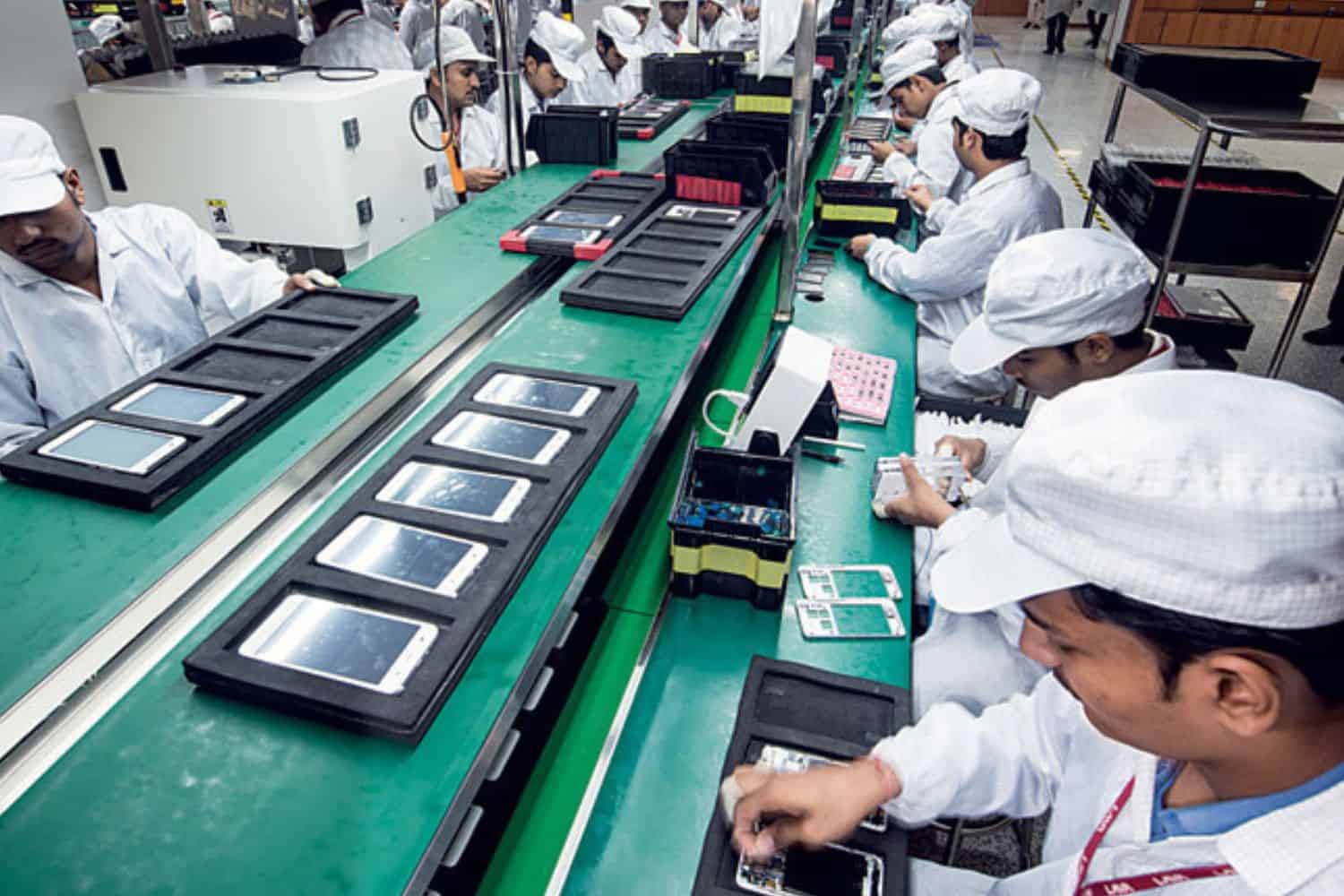

India has emerged as the top exporter of smartphones to the United States, overtaking China for the first time, according to a new industry report that highlights shifting global trade dynamics and the evolving landscape of electronics manufacturing.
The analysis reveals a notable increase in the number of smartphones sent from India to the United States market in the past few months, demonstrating a widespread pattern among global tech firms shifting their manufacturing locations away from China. This change is a component of a broader strategy to lessen dependence on a singular production center and manage geopolitical challenges, supply chain risks, and changing trade regulations.
China held a leading role in the worldwide smartphone production market for many years, providing devices to almost every major brand. Nonetheless, rising worries about trade conflicts, heightened tariffs, and political tensions—especially between Washington and Beijing—have led tech companies to reconsider their manufacturing approaches.
India’s rise in exporting smartphones stems from a collaborative push by the authorities and the business sector to establish the nation as a global manufacturing hub. Initiatives like the Production Linked Incentive (PLI) scheme motivate businesses to set up local manufacturing plants by providing financial incentives linked to production output and added value. Major companies like Apple, Samsung, and Xiaomi have either broadened or moved portions of their manufacturing activities to India, playing a key role in this transformation of export trends.
Experts emphasize that the increase in India’s smartphone exports is not just a result of changing trade biases but also due to enhancements in infrastructure, more efficient regulatory procedures, and a talented workforce. In the last five years, India has progressively built the ability to manufacture high-end smartphones, not just entry-level or mid-tier versions, which has been crucial for penetrating top-tier markets such as the United States.
Based on the newest data highlighted in the document, smartphone shipments from India to the U.S. experienced a significant percentage rise compared to the previous year, whereas China’s portion decreased over the same timespan. This indicates a noteworthy shift in worldwide supply chain dynamics and suggests a redistribution in the electronics manufacturing sector.
Industry experts consider this advancement a key achievement for India. It further establishes the nation’s expanding status as a dependable production hub, capable of fulfilling the strict quality requirements demanded by international markets. Additionally, it demonstrates how geopolitical factors can impact business choices and transform established trade partnerships.
Firms have mentioned various benefits of producing goods in India apart from financial incentives. These advantages encompass logistical benefits thanks to India’s nearness to key shipping routes, governmental backing for industries focused on exports, and a growing domestic market that presents more revenue prospects. For companies wanting to cater to both global and domestic clients, India offers a twofold benefit.
The change also fits within the wider «China plus one» strategy, a business method where businesses continue operations in China while increasing manufacturing in other countries to reduce risks. This approach gained traction during the COVID-19 pandemic, which revealed the vulnerability of relying on one-country supply chains and highlighted the necessity for increased robustness.
While India’s rise is notable, challenges remain. Industry experts caution that maintaining this upward trend will require continued investment in infrastructure, supply chain logistics, and workforce training. Additionally, navigating regulatory and tax complexities at both the national and state levels remains a hurdle for some companies.
Nonetheless, the momentum appears to be in India’s favor. The country is now not only a consumer hub for smartphones but also an increasingly important player in their global production and distribution. The growing presence of contract manufacturers like Foxconn and Pegatron in India further underscores this transformation. These firms, which have long served clients such as Apple in China, are now ramping up their Indian operations to meet global demand.
As India strengthens its role in the global electronics ecosystem, this development may prompt other countries to consider similar diversification strategies. Vietnam, Mexico, and Indonesia are among the other nations seeking to expand their manufacturing capabilities, but India’s scale, policy initiatives, and market size give it a competitive edge.
The report’s findings could have long-term implications for global trade patterns, especially as the U.S. continues to recalibrate its economic ties in the Indo-Pacific region. With smartphones being one of the most widely used and high-value consumer products, shifts in their production base carry symbolic and economic significance.
Looking ahead, India’s ability to sustain and grow its export performance will depend on its capacity to deliver consistent quality, innovate across product categories, and adapt to rapid changes in technology. The coming years will determine whether this initial lead over China is the beginning of a lasting transformation or a temporary shift driven by specific market conditions.
In any case, the transition marks a pivotal moment for India’s industrial sector and reflects broader changes in how global businesses approach manufacturing and trade in an increasingly complex and interconnected world.