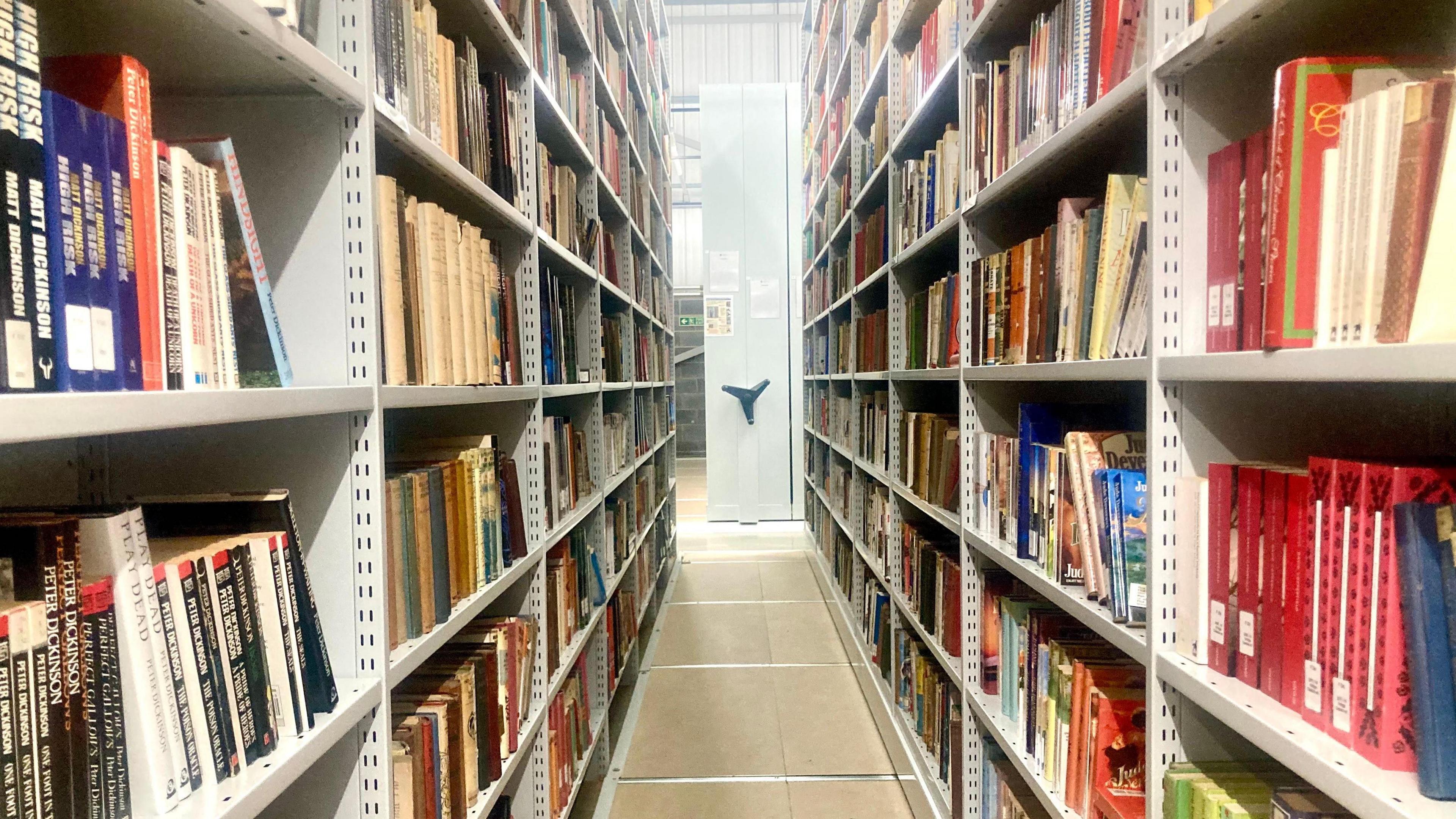

Concealed from public sight is one of the globe’s most extraordinary literary collections—an archive committed to safeguarding the legacy of Penguin Books. While only a select few have the chance to view it firsthand, this private collection is crucial for chronicling the development of one of the most influential names in the publishing world. The Penguin archive is not merely a reservoir of rare editions and historical documents; it stands as evidence of the lasting influence that books have on society.
The archive, maintained with meticulous care, houses thousands of documents, design proofs, manuscripts, internal memos, and first editions. Together, they tell the story of how Penguin transformed publishing in the 20th century—bringing literature, politics, science, and the arts to the hands of everyday readers. What began as an ambitious idea to make affordable books accessible to a mass audience eventually reshaped the relationship between literature and the general public.
Introduced to the market in 1935 by Allen Lane, Penguin transformed the publishing sector by offering well-made paperbacks at affordable prices. Lane’s idea was revolutionary for that era: he was convinced that literature should not be an exclusive privilege of the upper class but rather an accessible asset for everyone. Starting with its initial publications, Penguin dedicated itself to making books widely available while maintaining high editorial standards, establishing new benchmarks in the literary field.
The archive uncovers the choices and discussions that formed the distinct character of the publisher. It documents significant collections like Penguin Classics, which brought foundational literature from worldwide authors to new audiences, and Pelican Books, a series focusing on nonfiction that brought scholarly ideas to a wider public. The internal communication and editorial notes preserved within the archive provide insight into the processes of selecting, translating, and presenting books to the audience, frequently mirroring larger cultural and political transformations.
Beyond the books themselves, one of the most compelling aspects of Penguin’s legacy is its visual identity. The archive includes original cover artwork, typographic experiments, and marketing materials that illustrate the publisher’s commitment to design. From the iconic three-band covers to the bold modernist visuals of later decades, Penguin consistently pushed the boundaries of what a book could look like. Designers like Jan Tschichold and Germano Facetti helped define an aesthetic that made the publisher instantly recognizable on bookshelves around the world.
Este enfoque en el diseño no fue simplemente estético; formaba parte de una misión más amplia para indicar calidad y credibilidad. En una era en la que los libros de bolsillo solían considerarse efímeros, Penguin destacó al ofrecer contenido serio en formatos meticulosamente elaborados. Esa estrategia dio sus frutos: no solo los lectores empezaron a confiar en la marca, sino que también comenzaron a vincularla con rigor intelectual y relevancia cultural.
The archive also preserves moments of controversy and courage. Penguin’s decision to publish the unexpurgated edition of Lady Chatterley’s Lover in 1960, for instance, resulted in a landmark obscenity trial in the UK. The case tested not just the boundaries of decency but also the role of literature in challenging social norms. Penguin’s victory in court marked a turning point for freedom of expression in publishing, and the documents related to that case remain among the most studied items in the archive.
Why this compilation stands out significantly is due to the narrative it communicates about spreading knowledge more widely. Penguin has always pursued something greater than merely distributing books—it has focused on broadening access to reading, education, and cultural interaction. Thus, the archive transcends being solely a historical account; it represents a dynamic embodiment of concepts influencing society continuously. Correspondence from readers, extensively retained within the collection, reveals the profound personal influence of Penguin’s publications. For certain individuals, these books marked their initial encounter with philosophy, science, or world literature. For others, they served as vital support during periods of political repression or personal hardships.
The preservation of these materials serves more than nostalgia—it’s a resource for researchers, designers, publishers, and readers who want to understand how ideas are packaged and distributed. The archive offers insight into the behind-the-scenes decisions that shaped publishing history, but it also inspires new thinking about the future of books in a digital age.
Even as publishing continues to evolve, with e-books, audiobooks, and new platforms redefining reading habits, the Penguin archive reminds us of the power of the printed word. It celebrates a tradition of innovation that doesn’t resist change but adapts to meet readers where they are. In that sense, the spirit that launched Penguin in the 1930s still echoes today.
Although access to the archive is limited, its influence radiates outward. Exhibitions, academic studies, and retrospectives often draw on its contents to explore the intersections of literature, politics, and design. Each curated display or scholarly article that references the archive reaffirms its role as a vital part of cultural memory.
Perhaps most importantly, the collection underscores a simple but profound truth: books matter. They shape identities, challenge assumptions, and connect people across time and geography. Penguin’s archive stands as a quiet but powerful witness to that truth, holding within its shelves the evidence of how one publishing house helped open the world of ideas to millions.
Looking towards the future of reading, the archive provides both a historical account and an opportunity. It encourages us to keep pondering significant questions: Who can access information? Which narratives are shared, and by whom? And how can publishers keep meeting readers’ needs in innovative, inclusive, and creative ways?
By preserving its history, Penguin guarantees that its core values—openness, excellence, and inquisitiveness—stay prominent for those who come after us. Even though the volumes may rest on numerous bookshelves globally, the essence of Penguin’s tale lives on silently within its collection—a testament that publishing transcends mere text, embodying the persistent mission to provide those words to everyone.