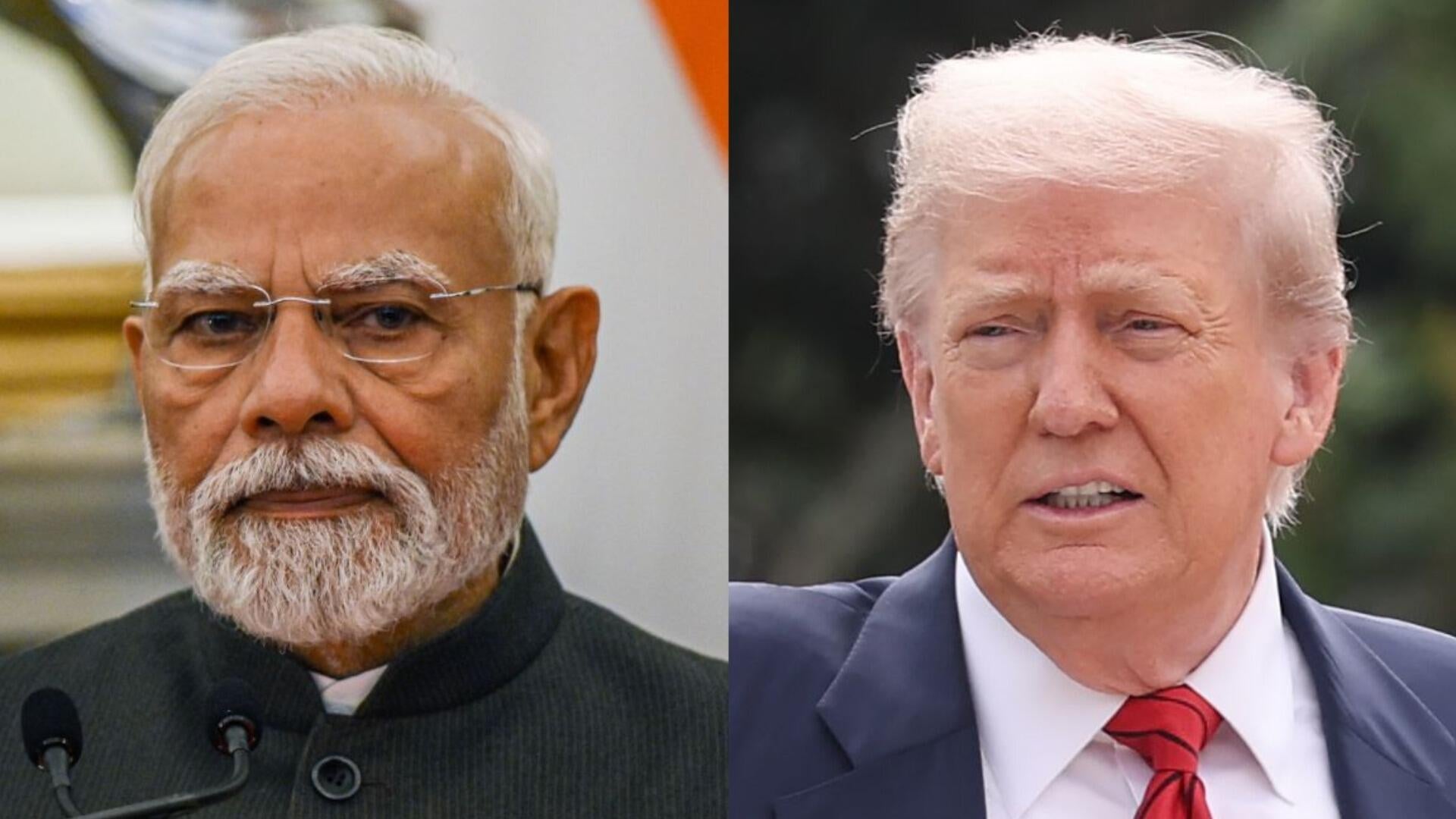

Former U.S. President Donald Trump has announced a new 25% tariff on Indian goods in response to the country’s ongoing purchase of oil from Russia, a move that has reignited debate over global trade policy, energy alliances, and geopolitical strategy. The tariff, described by Trump as a necessary measure to address what he views as unfair trade practices and strategic alignments, signals a sharp escalation in U.S.-India economic tensions.
India, being a major importer of energy worldwide, has upheld solid commercial relations with Russia despite global calls to curb this interaction after Moscow’s activities in Ukraine. By persisting in acquiring Russian crude at reduced prices, New Delhi has placed its focus on securing national energy and obtaining supplies economically—choices that, while justifiable in terms of domestic policy, have attracted disapproval from Western countries urging for united economic pressure on the Kremlin.
Trump’s imposition of the tariff is being framed as both a punitive and strategic action. During public remarks, he stated that India’s continued energy dealings with Russia undermine the global efforts to isolate the country economically. He further claimed that the new trade penalty is intended to «level the playing field» and discourage what he called “backdoor support for hostile regimes.”
Trade experts note that the 25% tariff is not unprecedented in Trump’s broader economic approach, which during his presidency was marked by unilateral tariffs, aggressive renegotiation of trade agreements, and a «America First» doctrine that often strained traditional alliances. However, applying such a steep tariff on India—an increasingly important U.S. partner in the Indo-Pacific region—could have long-term diplomatic consequences.
India’s government has yet to respond with countermeasures but is reportedly reviewing its trade policy options. Analysts believe retaliatory tariffs or the reassessment of defense and technology cooperation agreements could be on the table if the situation escalates. Indian officials have previously defended their energy transactions with Russia as both legal and necessary, emphasizing that these deals are conducted in the national interest and often under long-term contracts.
The announcement of the tariff comes at a time of increasing global complexity. With energy prices remaining volatile and supply chains still under strain, many developing economies are exploring diverse sourcing strategies. India’s relationship with Russia, particularly in the energy and defense sectors, has historical depth and has not been easily swayed by external political pressures.
Meanwhile, U.S. businesses are watching closely. A 25% tariff could affect billions of dollars in Indian exports to the United States, particularly in sectors like pharmaceuticals, textiles, automotive parts, and technology services. American companies that rely on Indian imports may see increased costs, which could eventually impact consumers. Business coalitions have already begun lobbying for exemptions or a rollback of the tariff, warning that the measure may hurt American competitiveness more than it punishes India’s policies.
Algunos observadores opinan que la acción también tiene un momento político calculado. Con la temporada de elecciones presidenciales en EE. UU. en aumento, las acciones de Trump son vistas por algunos como parte de una estrategia más amplia para reafirmar su postura dura sobre comercio y política exterior. Al dirigirse a India, un país con creciente importancia geopolítica, Trump podría estar buscando presentarse como un líder dispuesto a desafiar incluso a los aliados cuando los intereses nacionales están en juego.
Others warn that such policies could have unintended consequences. India has been a strategic counterbalance to China in the Asia-Pacific, and its cooperation is considered vital in maintaining regional stability. Imposing steep economic penalties could weaken ties at a time when diplomatic coordination among democracies is viewed as crucial.
Environmental defenders have also expressed their views, emphasizing that penalizing nations for their energy sourcing choices should consider international climate objectives. India’s shift to renewable energy is ongoing, and obtaining reasonably priced oil is crucial for maintaining economic stability as it develops its renewable capacity. Opponents warn against immediate punitive measures that might hinder long-term worldwide collaboration on sustainability and reducing emissions.
At the international level, the tariff is likely to be seen as a warning to other countries maintaining or expanding economic ties with Russia. Yet, experts argue that this approach risks further fragmentation of global trade and may encourage alternative alliances and trading blocs that bypass U.S. influence.
In the coming weeks, much will depend on how India responds. Whether through direct diplomatic engagement, retaliatory trade measures, or a recalibration of its foreign policy posture, New Delhi’s next steps could shape the future of U.S.-India relations. For now, businesses, policymakers, and international observers are bracing for the ripple effects of what could become a significant turning point in global trade dynamics.
While Trump’s choice might resonate with his enduring beliefs in independence and assertive economic policies, it brings forward fresh obstacles in a world that is becoming more dependent on delicate diplomacy and collaborative efforts between nations. The effects of this decision will emerge not only in trade figures but also within the wider framework of global partnerships, energy strategies, and the continuous transformation of international standards.