
Marco Rubio and the U.S.’s high-risk wager for Venezuela in the post-Maduro era
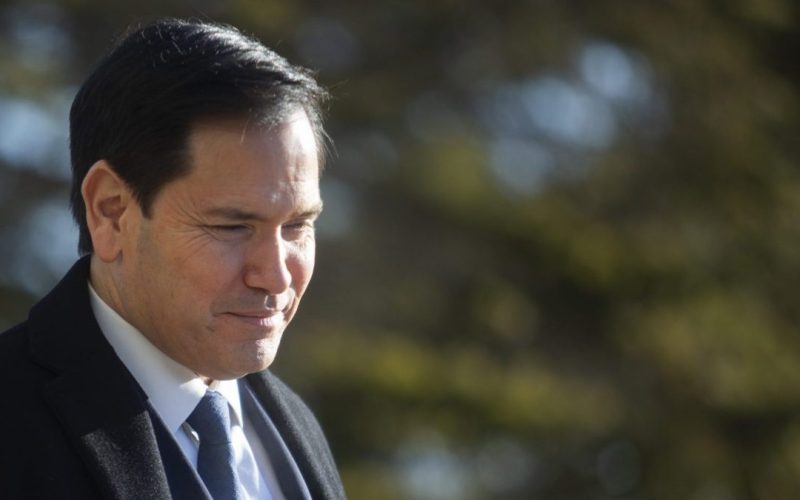
The sweeping arrest of Nicolás Maduro became a pivotal moment in U.S.–Venezuela relations, with Marco Rubio at its core, whose influence within the Trump administration has recast Washington’s strategy toward Caracas and stirred profound uncertainty over what lies ahead for a fractured nation.
On a January night filled with symbolism and high stakes, U.S. military actions against Venezuela unfolded far from Washington’s usual hubs of command. From Mar-a-Lago, President Donald Trump monitored the raid that resulted in the capture of Nicolás Maduro, with Secretary of State and National Security Advisor Marco Rubio at his side. The moment conveyed more than a tactical maneuver; it signaled a growing concentration of authority and confidence within a tight circle of advisers who have shaped U.S. strategy toward Venezuela with notable secrecy and intensity.
For Rubio, the moment carried personal, political, and strategic significance, intertwining his background and beliefs. The son of Cuban immigrants and a figure molded by South Florida’s exile circles, he has consistently regarded the Maduro government as a destabilizing actor whose influence spills far beyond Venezuela’s borders. Over the years, his language gradually shifted into concrete measures, leading to a position that now places him at the center of shaping U.S. engagement in Venezuela’s trajectory. What remains unresolved is whether that engagement will stay limited and transactional or evolve into something extended and deeply transformative.
A professional path gradually leading to Venezuela
Rubio’s ascent within the Trump administration has unfolded through a growing set of duties seldom concentrated in one official, and as both chief diplomat and national security advisor, he functions with a degree of access that lets him bypass conventional bureaucratic pathways. Venezuela has emerged as the most vivid demonstration of that reach. Officials familiar with the matter note that Rubio played a pivotal role in crafting the approach that diplomatically isolated Maduro, increased economic pressure, and ultimately framed military intervention as an effort tied to counter-narcotics and regional stability.
This focus did not materialize instantly. Across his tenure in the Senate, Rubio repeatedly portrayed Maduro as a “narco-dictator” whose regime eroded any boundary between governmental power and criminal activity. His strategy centered on sanctions, diplomatic isolation, and demands for justice. What has shifted is the extent of control he now exercises over implementation, evolving from an advocate into someone directly steering policy results.
Trump’s declaration that Rubio would take charge of Venezuela following Maduro’s capture was deliberately ambiguous yet telling, conveying trust in Rubio’s judgment while avoiding specifics about authority, legitimacy, or timeframe, and prompting both supporters and opponents to question how such a setup would actually operate and whether it suggested a shift in regime despite earlier denials.
Strategizing behind closed doors
In the months leading up to the operation, decision-making around Venezuela narrowed to a small circle inside the White House. Rubio worked closely with Deputy Chief of Staff Stephen Miller, forging an alliance rooted in shared hardline instincts. Although their portfolios differ, both favored an aggressive posture that framed Venezuela less as a diplomatic challenge and more as a security threat linked to drug trafficking and migration pressures.
This collaboration reshaped internal debates. Early discussions reportedly considered Venezuela primarily through the lens of deportations and border enforcement. Over time, the argument that Maduro’s government functioned as a hub for criminal networks gained traction, reframing the issue as one of direct national interest. That shift provided the policy justification for expanded military presence in the region and strikes against suspected smuggling operations.
Many established participants were pushed to the margins during the process, with career diplomats, regional specialists, and even certain senior State Department officials often notified only once choices had already been finalized rather than being engaged in advance. Supporters claim this method curtailed leaks and sped up decision-making, while critics argue it heightened the likelihood of strategic oversights and potential legal exposure.
Questions of governance and legitimacy
With Maduro removed from the scene, attention has turned to what follows. Interim leadership under figures previously aligned with the old regime complicates the narrative of liberation or democratic transition. U.S. officials have emphasized leverage rather than partnership, maintaining economic pressure—particularly through control over oil revenues—as a means of influencing behavior.
Rubio has articulated this strategy as conditional engagement. Sanctions relief and cooperation, he argues, will depend on tangible actions that align with U.S. priorities: curbing migration flows, dismantling drug trafficking networks, and limiting the influence of rival powers. Democratic reforms, while acknowledged as desirable, appear secondary in the immediate calculus.
Former diplomats voice discomfort with this order of steps, noting that Venezuela’s vast scale, intricate dynamics, and weakened institutions make effective governance challenging even in the best circumstances. Trying to enforce stability without a defined framework or direct presence on the ground could extend turmoil. The lack of a U.S. diplomatic mission adds another layer of difficulty to coordination, oversight, and rebuilding efforts, whether they involve oil infrastructure or wider civil governance.
Rubio serving as the administration’s lead negotiator
In Congress, Marco Rubio has emerged as the leading figure articulating and justifying the administration’s decisions, and lawmakers characterize him as poised, assured, and highly versed in the workings of the Senate, often speaking off the cuff rather than relying on scripted notes, which lends him an air of authority over both the facts and the broader strategic landscape.
That fluency has not shielded him from criticism. Some lawmakers argue that briefings prior to the operation downplayed the likelihood of military action or regime change, creating a gap between assurances and outcomes. Questions about international law, sovereignty, and precedent continue to surface, particularly among Democrats who view the raid as destabilizing.
Nevertheless, many Republicans seem to find Rubio’s explanations compelling, particularly those who view Venezuela as a security threat rather than solely a diplomatic issue. For this group, Maduro’s capture is seen as a chance to reshape relations on terms more advantageous to U.S. interests.
Background and political beliefs
Observers often trace Rubio’s intensity on Venezuela to his upbringing in Miami, where narratives of exile, authoritarianism, and lost homelands are part of daily political life. Cuban, Venezuelan, and Nicaraguan communities have shaped a worldview in which leftist authoritarian regimes are seen not as distant abstractions but as forces with direct impact on American communities.
This perspective sets Rubio’s method apart from more theoretical ideological hawkishness, with supporters claiming it anchors his stance in real-world experience and a sense of moral resolve, while critics contend it restricts viable options by favoring confrontation over compromise and limiting opportunities for more nuanced engagement with Venezuela’s internal dynamics.
Notably, Rubio’s attitude toward the Venezuelan opposition has evolved. Although he previously voiced strong backing for figures like María Corina Machado and Edmundo González, he has lately refrained from endorsing their potential participation in any future government. This shift indicates a departure from purely symbolic alignment, leaning instead toward a more pragmatic evaluation of who might ensure stability and effective cooperation.
The challenge of managing multiple fronts
Despite Trump’s assurance, the idea that Rubio could handle Venezuela’s everyday governance while also juggling broad diplomatic duties appears highly implausible. Former officials point out that effective delegation, dedicated envoys, and strong interagency coordination are essential. Lacking such frameworks, even a narrowly defined mission centered on oil and security might exceed current operational capacity.
Appeals for appointing a special envoy highlight how immense the challenge ahead truly is. Reestablishing institutions, bringing essential services back online, and managing internal power struggles all demand steady focus and seasoned expertise. With development agencies dismantled and experienced staff missing, the outlook for sustained involvement becomes even more difficult.
Meanwhile, interim Venezuelan leaders have sent mixed signals—condemning the operation one day, proposing cooperation the next. Rubio has stated that Washington will judge them by actions rather than rhetoric, keeping pressure firmly in place until measurable changes occur.
An opening for advantage or an extended high‑stakes risk
Supporters of the administration frame the current moment as a chance to “turn the page” in Venezuela, offering conditional cooperation as a path toward stability. Skeptics warn that without a clear exit strategy, the United States risks entanglement in a complex political landscape where leverage can quickly turn into liability.
Rubio stands at the center of this uncertainty. His ascent reflects trust earned through loyalty and persuasion, but it also concentrates accountability. If Venezuela stabilizes and aligns more closely with U.S. interests, his approach may be vindicated. If not, the operation could become a case study in the limits of coercive diplomacy.
As events keep evolving, one fact stands out: capturing Nicolás Maduro did not settle the Venezuela issue. Instead, it moved it into a new and uncertain stage, where Marco Rubio’s choices, priorities, and ability to adjust will influence not only U.S. strategy but also the direction of a nation still trying to determine its future.
This story has been revised to include further details sourced from CNN.